Commercial Storm Damage in Van Buren, IN
Storm water in a commercial building spreads by the hour. Van Buren Water Restoration dispatches to Van Buren properties within two hours.
Van Buren Water Restoration is the Van Buren call for Commercial Storm Damage: emergency crews around the clock, moisture readings instead of guesswork, and insurance files built properly. Call (765) 517-7678.
- Service: Commercial Storm Damage for Van Buren homeowners
- Service area: Van Buren, IN and surrounding areas
- Response time: Same day emergency response for Van Buren; 24/7 availability
- Licensed and insured (License #RC21100059)
- Serving Van Buren, IN since 2018
Commercial Storm Damage Cleanup in Van Buren
We'll secure and dry commercial buildings in Van Buren after a storm opens the roof or floods a lower level.
Storms Here
Spring and summer are severe thunderstorm season here, and the occasional tornado comes with them. NWS Indianapolis posts summaries of past storms, which helps when your carrier asks for a date.
We respond to storm calls from businesses anywhere in Van Buren, including those around Van Buren Town Hall and Van Buren Public Library. We also handle commercial storm damage in Sweetser, Upland, Marion and Warren.
Commercial Storm Damage for Van Buren Businesses
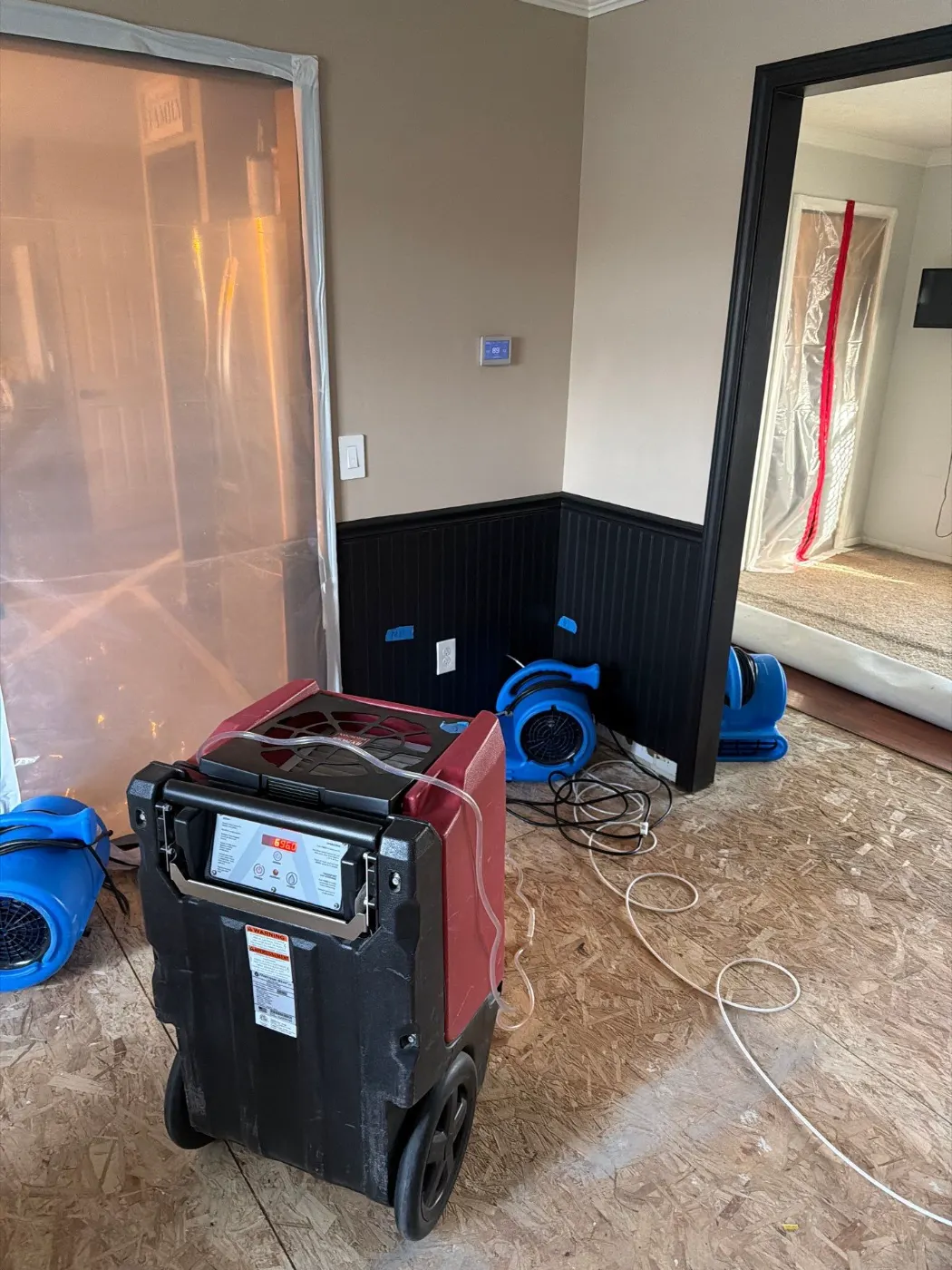
Water's coming through the roof deck of your Van Buren building and the storm has already moved on. Ponded water over a failed drain finds the weakest seam and keeps feeding it long after the rain stops. Van Buren Water Restoration sends a crew to commercial water intrusion calls in Van Buren, IN within two hours with extraction units, dry in materials, and the moisture readings that tell you how far the water already traveled.
Van Buren Water Restoration handles the ceiling and finish rebuild once the drying log says it can. Grid gets releveled, new lay in tile goes in, insulation is replaced to the assembly's original value and painted surfaces get finished to a clean line. You approve the rebuild scope in writing, and a punch walk with the property manager closes it out in your Van Buren building.
The first map is a snapshot, and water keeps moving after it. About a day into the job the crew scans the same areas again with the camera and the meter and compares the outlines with the first map. If the wet area has grown, equipment moves and the scope changes before the next day's readings. Both maps stay in the file for your Van Buren building.
Commercial mitigation scopes from Van Buren Water Restoration get written in the line item format adjusters already work in. The scope is built off measured affected area, the drying equipment the readings justified and the labor the work took. If anybody questions a line, the readings and the photos behind it are in the same file, and you decide with your carrier what happens next.
Stock or equipment sitting in water at your Van Buren property is the first thing to mention when you call Van Buren Water Restoration. The crew plans the move and the protection before extraction begins, and you get a photo list of what moved that tenants can use for their own claims.
Signs You Need Commercial Storm Damage Restoration
If you notice any of these in your Van Buren building, schedule a free inspection before the issue worsens.
Window sills or curtain wall mullions holding water on the inside face after wind driven rain
Grout between floor tiles darkening in a pattern that spreads a little more each day
Stains that start at the top floor and reappear on the same wall two floors down
Daylight visible through a roof penetration curb or around the flashing at a rooftop unit
Roof drain piping dripping at a joint inside a chase or above the ceiling
Floor boxes near the glass line with corrosion or standing water inside
Vinyl tile or glue down carpet lifting at the seams out in the middle of a floor plate
Raised access floor panels that feel damp, with water showing beneath them in a telecom room
Rust on the metal stud track at the bottom of a wall cavity once an opening is cut
A roof drain or scupper running slow, gurgling, or ringed with debris and sediment
How Van Buren Water Restoration Handles Commercial Storm Damage
We follow these steps in order on every Van Buren job.
Emergency Roof Dry in
The membrane breach or failed detail gets covered with a temporary dry in built to hold through the next rain. Photos go in the file before and after. The permanent repair stays on the work order until a roofing scope takes it over.
Contents and Inventory Protection
Stock and equipment on wet floors get lifted onto blocking or moved to dry ground, with plastic over anything that has to stay. A photo list records what moved and where, which supports each tenant's own claim.
Containment and Air Control
Barriers go up at a corridor wall or partition line so one wet bay doesn't shut a whole floor. Negative air machines with HEPA filtration run where materials are coming out, and the crew keeps equipment clear of egress paths.
Structural Drying Setup
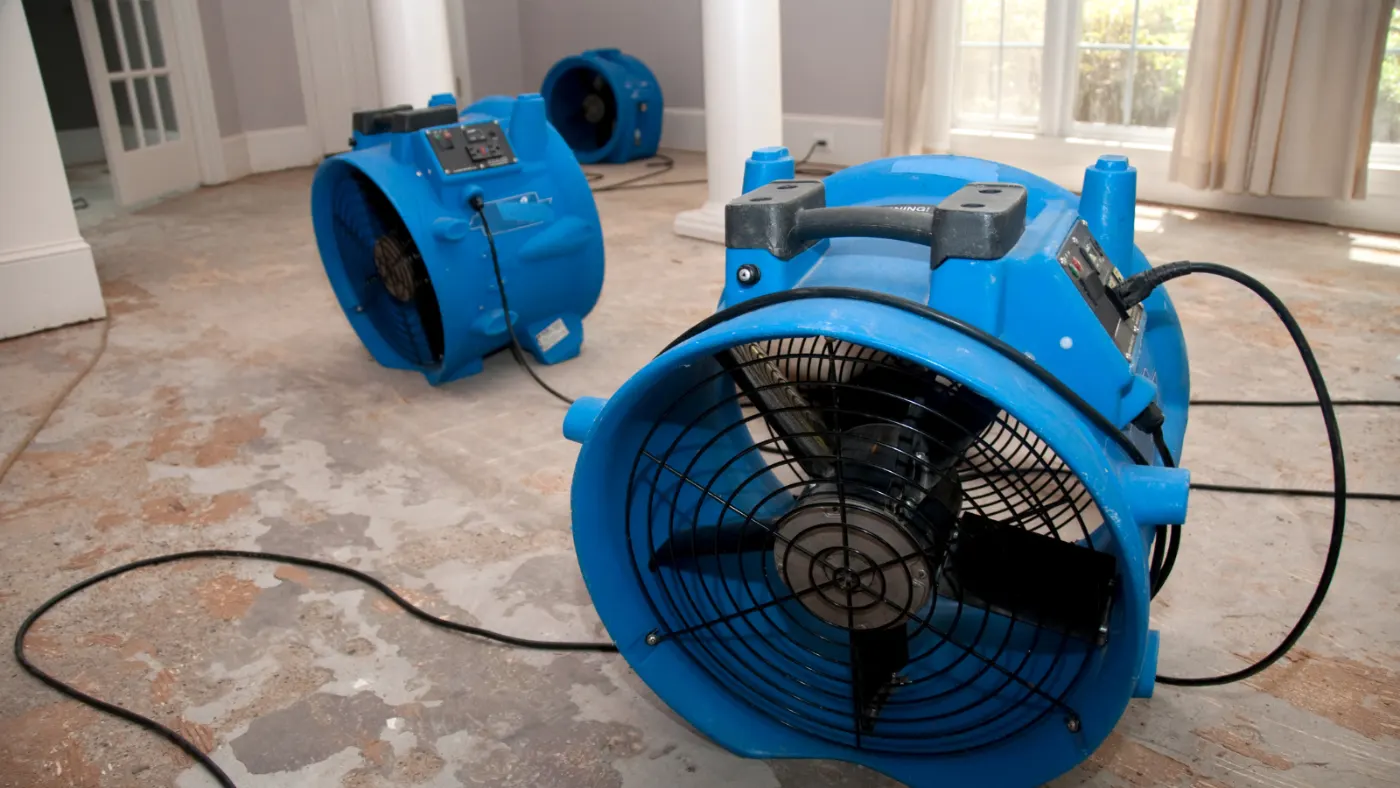
Dehumidification is sized to affected cubic footage, desiccant for open floor plates and refrigerant units for enclosed suites. Air movers go in at calculated angles. The crew checks available amperage and brings distribution or generator power when building panels can't carry the load.
Dry Standard Verified
Affected materials have to match the dry standard measured in an unaffected part of the same building before equipment comes out. Final readings, photos and equipment run hours go in the file, and a punch walk sets what's left to rebuild.
Commercial Storm Damage in Van Buren
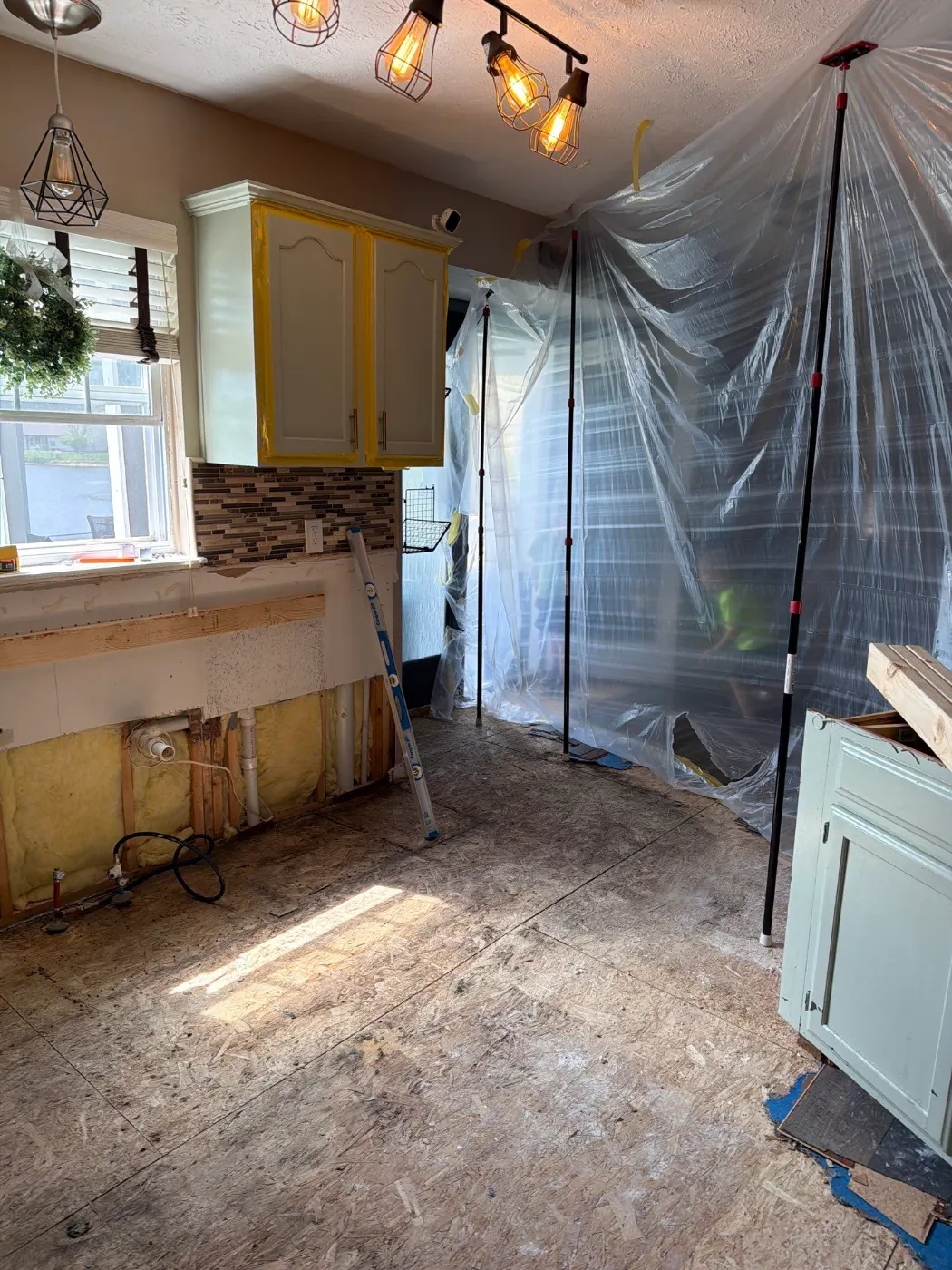
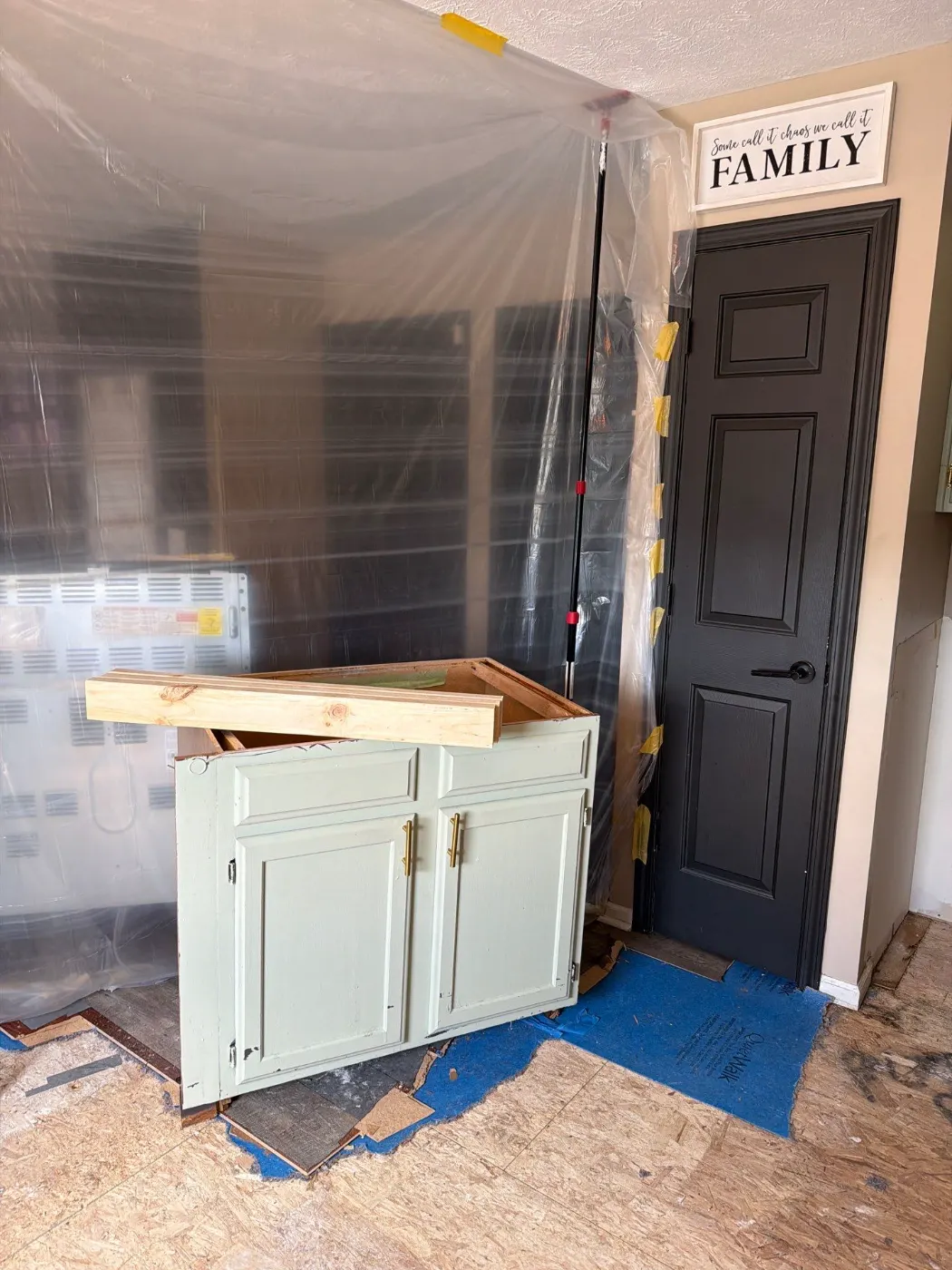
Photographs from real commercial storm damage jobs completed by our crew in Van Buren and surrounding areas.
Commercial Storm Damage FAQ
Questions Van Buren property managers ask us about commercial storm damage restoration.
Guidance and Standards for Commercial Storm Damage
- The National Weather Service office in Indianapolis posts summaries of recent central Indiana storm and flood events. NWS Indianapolis Event Summaries
- The ANSI/IICRC S500 is the published standard for professional water damage restoration. The current edition is the Fifth Edition, 2021. IICRC S500 Standard
Van Buren Neighborhoods We Serve
We take commercial storm damage calls in every part of Van Buren. Pick your neighborhood for local details.
Other Restoration Services in Van Buren
Van Buren Water Restoration handles the full scope of restoration work. Explore our other services below.
Water Damage Restoration in Van Buren
24/7 emergency response. IICRC certified water restoration from extraction to full dry out.
Learn more →Basement Flooding in Van Buren
Basement water emergencies handled fast. Extraction, drying, mold prevention.
Learn more →Sewage Cleanup in Van Buren
Category 3 biohazard cleanup. Full containment, decontamination, structural restoration.
Learn more →Request Commercial Storm Damage Restoration
Reach Us Directly
Our team is available 24/7 for emergencies and ready to schedule inspections during business hours.
Need Immediate Help?
For active water or mold emergencies, call us directly. We are available 24/7.